Korean Dermatologist Post-Procedure Skin Care Guide
The 72 hours after a skin procedure are the most important in your entire treatment cycle and they're also the period most people handle incorrectly. Korean dermatology has a clear, methodical protocol for post-procedure recovery built on barrier protection first and stimulation never. This article explains exactly what that looks like, and why it produces better long-term results.
What Is the Korean Dermatologist Approach to Post-Procedure Skin Care?
Walk out of any laser session, chemical peel, or microneedling appointment and your skin is in a state it has rarely been in before. The surface is disrupted, the barrier is compromised, and the skin's natural recovery processes are fully underway. What you do in the hours and days that follow will either support that process or complicate it.
The Korean dermatologist approach to post-procedure skin care begins from a single, governing premise: calm the skin completely before asking anything of it. This is not simply a matter of being gentle. It is a structured, phase-based methodology built on decades of clinical dermatology research and a K-beauty philosophy that treats recovery as its own form of treatment. Rather than rushing to restore a full active routine, Korean practitioners establish a deliberate calming window, using a precise set of barrier-supportive ingredients to give the skin the environment it needs to recover fully and hold onto the results of the procedure itself.
Across Australia, clinics and skin practices are increasingly adopting this framework, recognising that what a client applies between sessions matters as much as what happens inside the treatment room.
How the Skin Responds After a Procedure
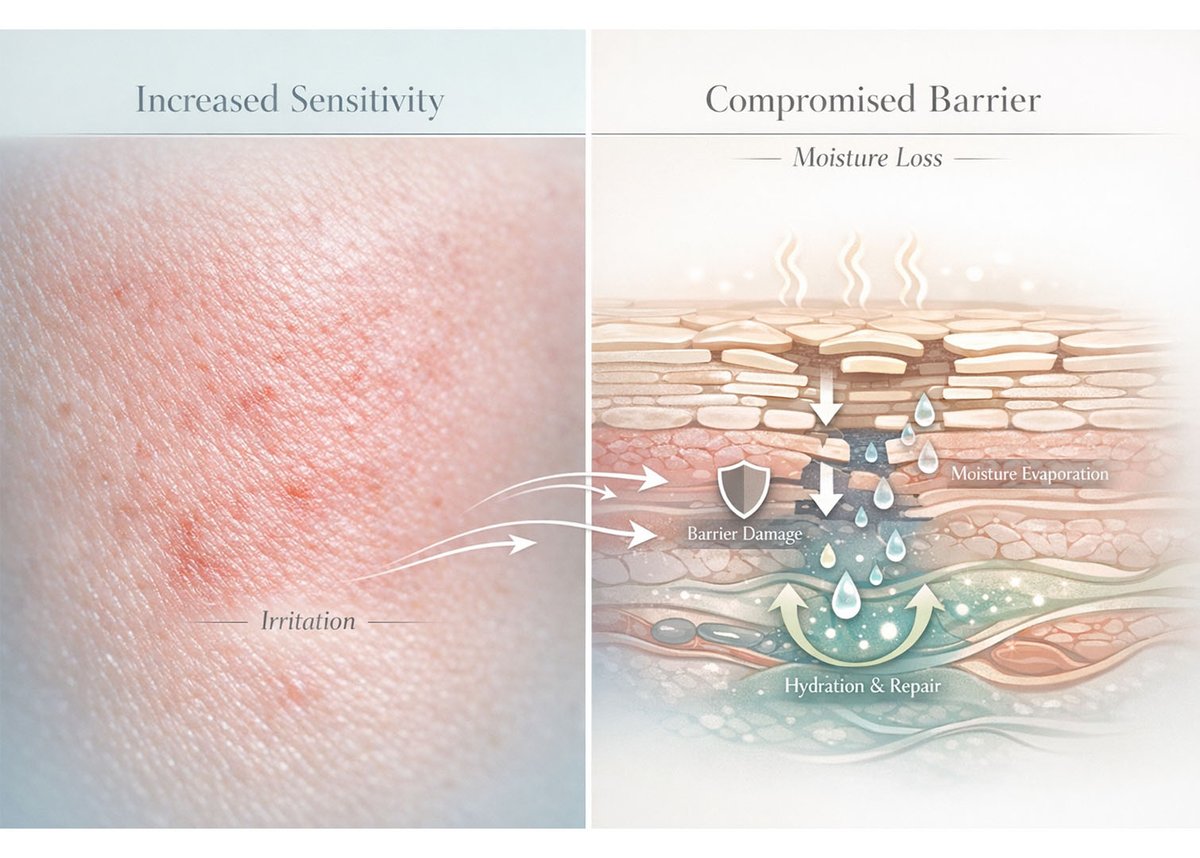
Any significant in-clinic treatment involves a deliberate disruption to the skin's surface. Laser resurfacing, medium-depth peels, and microneedling all work by initiating a controlled response in the skin, which then drives the renewal and rejuvenation that make these procedures worthwhile. That disruption, however, also temporarily compromises the stratum corneum, the outermost layer of the skin responsible for regulating moisture loss and maintaining the barrier between the body and its environment.
In the immediate aftermath of a procedure, transepidermal water loss increases significantly. The lipid matrix of the stratum corneum, which is composed primarily of ceramides alongside cholesterol and free fatty acids, is transiently disturbed. The skin becomes acutely sensitive to fragrance, alcohol, and even mild actives that would ordinarily be well tolerated. Visible redness reflects increased microvascular activity as the skin mobilises its natural recovery response.
Understanding this physiology explains why the Korean approach is so clinically sound. Ceramide-containing formulations, gentle humectants, and anti-redness botanical ingredients are not simply comforting choices for sensitive skin. They are ingredients selected because they align with what the skin is biologically doing during recovery. Supporting the lipid matrix, maintaining hydration, and helping calm the appearance of redness are precisely the functions the skin needs most during this window.
 ---
---
Key Ingredients for Post-Procedure Barrier Support
Post-procedure formulation is not about variety. It is about precision. The most effective recovery protocols use a small number of well-understood ingredients, each chosen because its function maps directly onto a stage of the recovery process.
Ceramides are foundational. Forming approximately half of the stratum corneum's lipid matrix, they are the structural component most directly affected by any procedure that disrupts the skin's surface. Ceramide-containing formulations used during recovery help support skin barrier function during the period when the barrier is most in need of reinforcement.
Panthenol, or Vitamin B5, is a consistent presence in Korean post-procedure formulations for good reason. As a humectant, it supports the skin's ability to retain moisture. It also promotes healthier-looking skin by helping the surface stay supple and comfortable during the recovery period, which is particularly relevant in the dry and variable climate conditions found across much of Australia.
Centella Asiatica, one of the most studied ingredients in Korean clinical skincare, contains madecassoside and asiaticoside, compounds that help calm the appearance of redness and support the skin's natural recovery processes without causing further disruption. It is appropriate from the earliest stages of post-procedure care and compatible with even the most sensitised skin profiles.
Multi-weight hyaluronic acid provides layered hydration across different depths of the skin's surface without the heaviness that can feel uncomfortable on recently treated skin. Guaiazulene, a deep blue compound derived from chamomile, helps calm the appearance of redness and is particularly well suited to the mid-recovery phase when residual sensitivity lingers after visible redness has settled.
PDRN, or polydeoxyribonucleotide, is a biocompatible compound that supports the skin's natural renewal processes. In a post-procedure context, it offers skin-supportive benefits that make it a considered choice for the point at which recovery transitions into rejuvenation. Paired with bakuchiol, a plant-derived ingredient that supports firmer-looking skin without the irritation profile associated with retinoid alternatives, it provides a bridge between the calming window and the active-support phase that follows.