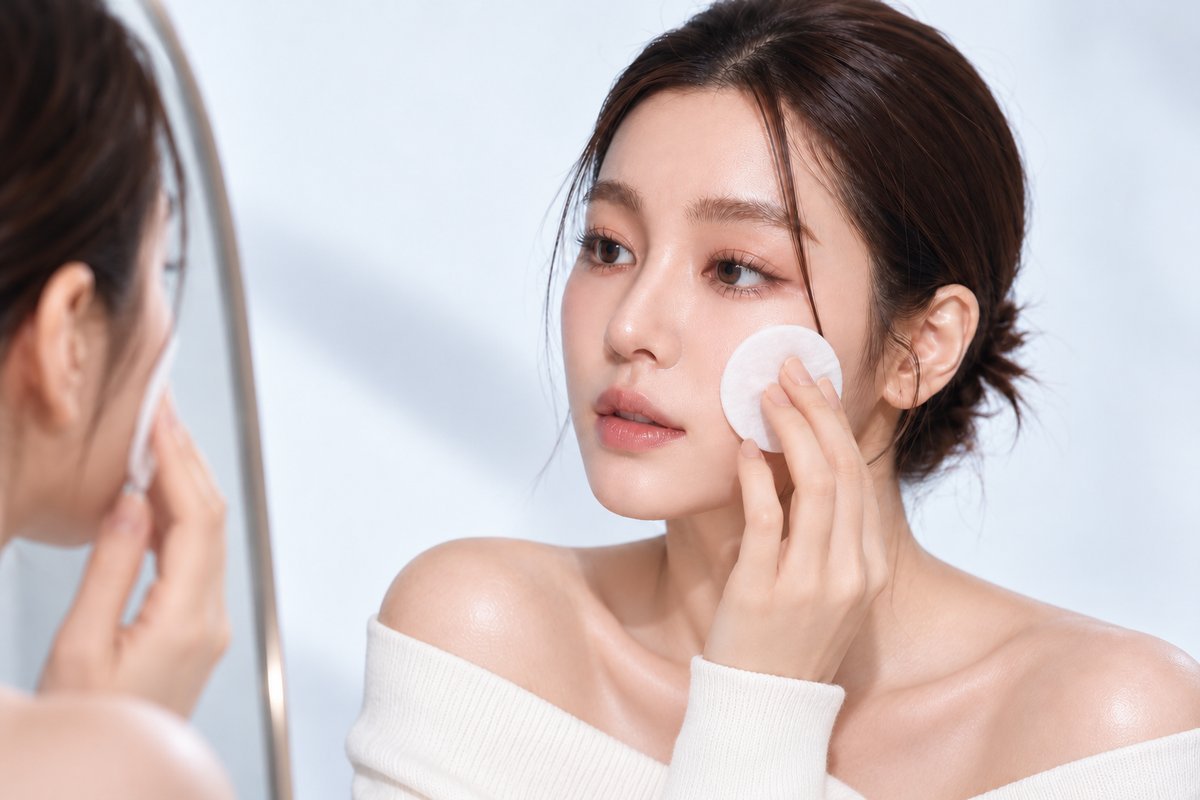
Korean toner pads can be a hydration step, an exfoliating treatment or a combination of both. For sensitive skin, their suitability depends on the liquid formula, the pad’s texture, how you use it and what else is in your routine. Being Korean skincare—or coming in a convenient pad—doesn’t guarantee gentleness.
If you’re considering Korean toner pads for sensitive skin, start with the job you want them to do. An extra hydration step and an extra exfoliation step call for different decisions, especially if you already use retinol or exfoliating acids.
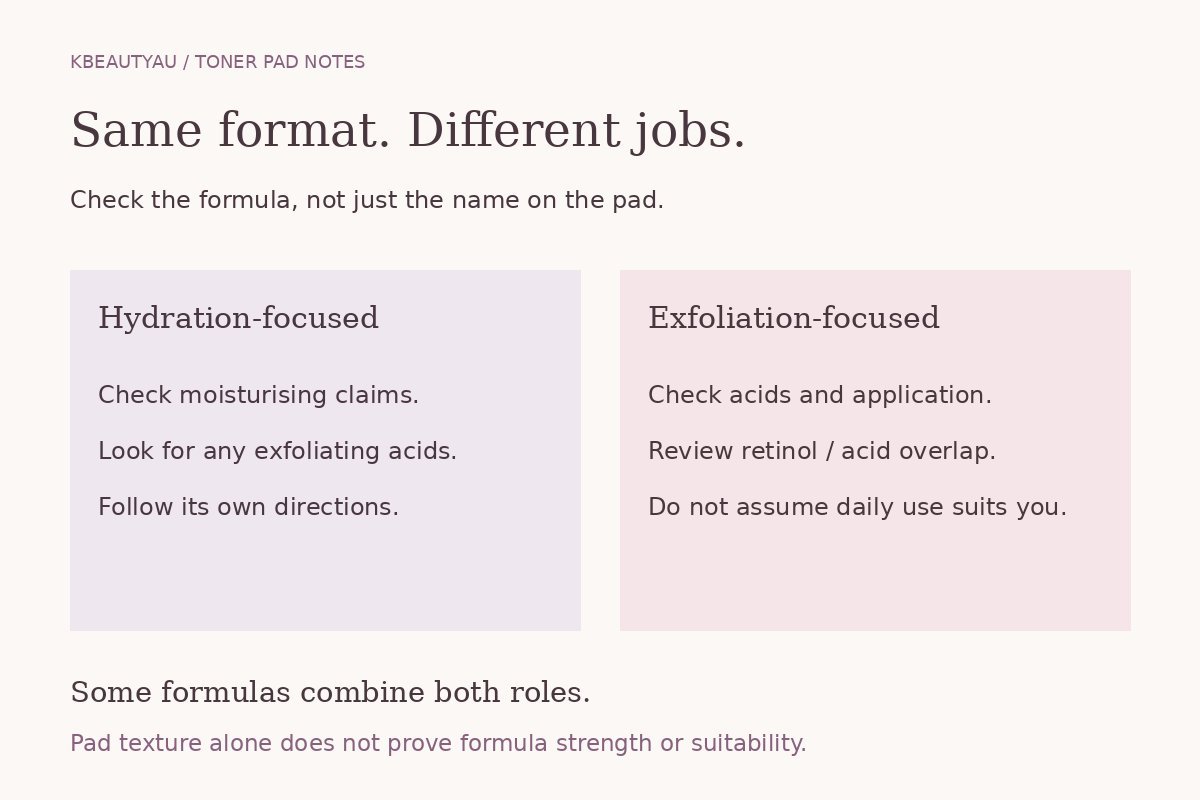
Hydrating pads and exfoliating pads: what’s the difference?
A toner pad is a way of delivering a skincare formula. The name alone doesn’t tell you what that formula does.
| Pad type | What to check | What needs closer attention |
|---|---|---|
| Hydration focused | Directions and claims centred on adding moisture | Whether exfoliating ingredients or a textured wiping surface are also present |
| Exfoliation focused | Claims such as exfoliating, peeling or removing dead skin, alongside exfoliating ingredients | Application method, frequency and overlap with existing treatments |
| Combination | Both hydration and exfoliation claims | The moisturising claims don’t cancel out the exfoliating function |
The American Academy of Dermatology (AAD) distinguishes chemical exfoliation, including alpha and beta hydroxy acids, from mechanical exfoliation using tools such as pads. A pad can therefore introduce friction as well as an exfoliating formula. Source: AAD
A soft-looking pad isn’t proof of a mild formula. Equally, a hydration-focused liquid doesn’t make repeated rubbing necessary.
Check the formula, check your routine, follow directions
1. Check the formula
Read the product description, complete ingredient list and directions together.
Look for a clear answer to these questions:
- Is the intended purpose hydration, exfoliation or both?
- Does it contain exfoliating acids, such as glycolic, lactic or salicylic acid?
- Does it contain anything you already know your skin reacts to?
- Do the directions explain whether to wipe, press, rinse or leave the formula on?
An ingredient name alone cannot establish how strong or tolerable a finished product will be. If acid concentration, formulation details or clear use instructions are missing, you cannot confidently rank its strength from the ingredient list.
Treat terms such as “gentle”, “daily” and “for sensitive skin” as claims to assess alongside the directions and your own tolerance. They don’t establish that the product suits your particular routine.
2. Check your routine
Before adding a pad, write down the treatment steps you already use. Include exfoliating toners, acid serums, scrubs and retinol—not just products labelled “exfoliator”.
The AAD advises reviewing existing skincare before exfoliating: retinol, prescription retinoids and benzoyl peroxide can make skin more sensitive or prone to peeling, and adding exfoliation may worsen dryness. Source: AAD
Use the pad’s purpose to guide the decision:
- You want hydration: assess whether a hydration-focused pad adds something useful beyond your existing moisturising steps.
- You already use an exfoliating acid: an exfoliating pad adds another exfoliation step. Consider whether it would replace an existing step rather than simply joining it.
- You use retinol or a prescription treatment: check the treatment instructions before introducing exfoliation. Ask your pharmacist, GP or dermatologist if compatibility is unclear.
- Your routine already feels comfortable and meets your needs: there is no requirement to add toner pads.
Putting products on different nights does not, by itself, establish that the overall routine will suit your skin. It still matters how often you use each treatment and how your skin responds.
3. Follow directions
Use the product according to its own instructions, including application method, contact time, rinsing and frequency. Don’t turn a wipe-on pad into a leave-on mask unless the directions specifically allow that use.
For an exfoliating pad, “daily” on the packaging should not become a target you feel obliged to reach. The AAD says exfoliation frequency depends on skin type and method; more aggressive exfoliation generally calls for less frequent use. Source: AAD
If the directions are vague, seek clarification before experimenting with longer contact times or more frequent application.
Pad texture and rubbing deserve their own check
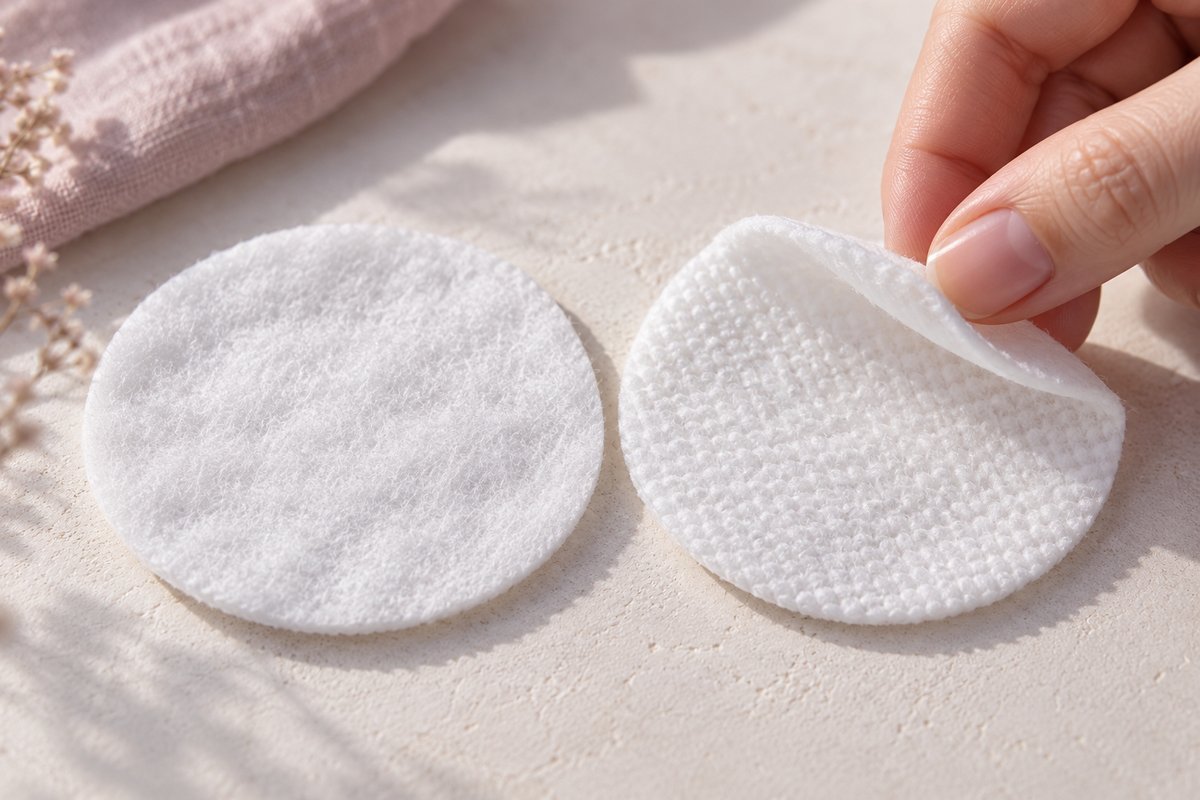
Inspect both sides of the pad. An embossed or rough surface used with repeated wiping adds a different physical action from lightly applying liquid with a smooth surface.
Avoid scrubbing or making repeated passes to chase a “squeaky clean” feeling. If the intended application feels abrasive, reconsider whether that pad suits you.
The AAD notes that mechanical exfoliation may irritate sensitive skin and advises against exfoliating sunburnt skin or areas with open cuts or wounds. Source: AAD
How to assess an extra pad step

Make the decision specific: “I want a convenient hydration step” is more useful than “I need toner pads because they’re popular”.
Before introducing one, check that you can explain:
- Its purpose: what will this add to your routine?
- Its overlap: are you already doing that job with another product?
- Its method: does it require wiping, pressing or rinsing?
- Its limits: what do the directions say about frequency and compatibility?
Introduce one new product at a time so changes are easier to assess. Don’t increase use simply because the first application felt comfortable.
If a new pad causes burning, persistent stinging, redness or peeling, stop using it. Seek advice from a GP or dermatologist if symptoms persist or recur rather than repeatedly trying to build tolerance.
Are toner pads worth it for sensitive skin?
They may be useful if their formula and application suit your skin and fill a clear gap in your routine. They may also be an unnecessary extra step.
For KBeautyAU readers, the practical choice is to check the formula, check your routine and follow directions. Decide whether you want hydration or exfoliation first, then assess the pad on that basis. You don’t need to exfoliate daily—or add a pad at all—to have a considered skincare routine.
Editorial status: Proposed draft for review; not approved for publication.
Visuals: AI-generated illustrative portrait, pad-detail photograph and mascot scene, plus a designed educational comparison. They do not depict a specific product, patient case or treatment result.