The ingredient sounds new. The science isn’t.
PDRN, often nicknamed “salmon DNA”, has an intriguing pitch for sensitive or ageing skin. Is there substance behind it?
There is real research. The hype comes from treating a serum and an injection as though they deliver the same results. Here is what matters before adding either to your plans.
What is PDRN?
PDRN stands for polydeoxyribonucleotide: fragments of DNA. Preparations described in medical research commonly use purified material from salmon or trout sperm. The finished ingredient is quite different from the raw material behind its nickname.
Researchers have investigated its role in biological signalling and processes involved in tissue repair. That provides a scientific rationale, not proof that every face cream regenerates skin. Pharmacology review
You will also see PN, meaning polynucleotides. Terminology overlaps, but fragment lengths, formulations and intended uses differ. The label alone cannot tell you what to expect.
Why haven’t we heard about it before?
PDRN has a medical research history stretching back decades. A 2001 clinical pilot, for example, investigated injected PDRN for healing sites where skin had been taken for grafting. That is a different question from whether a serum improves fine lines. 2001 study
Its everyday skincare presence feels newer. An ingredient once discussed in medical settings now sits alongside moisturisers and peptides in the beauty conversation. Separate new visibility from new invention: a long backstory does not establish what a particular bottle delivers.
Real deal or hype? Follow the delivery method
Topical skincare: encouraging early evidence
A 2026 randomised trial studied 31 women aged 35 to 55 with sensitive skin identified through a questionnaire. For 28 days, they used a specific 0.1% PDRN eye cream on one side and 0.1% retinol in the same base on the other. Researchers reported improvements favouring PDRN on several measures around the eyes, with good tolerability.
These findings are promising, but they do not establish PDRN as a retinol replacement. This was one small trial without an inactive cream comparison. Four weeks cannot settle comparisons with retinoid use over longer periods or prove every PDRN serum effective. 2026 topical trial
Injections: different delivery, different evidence
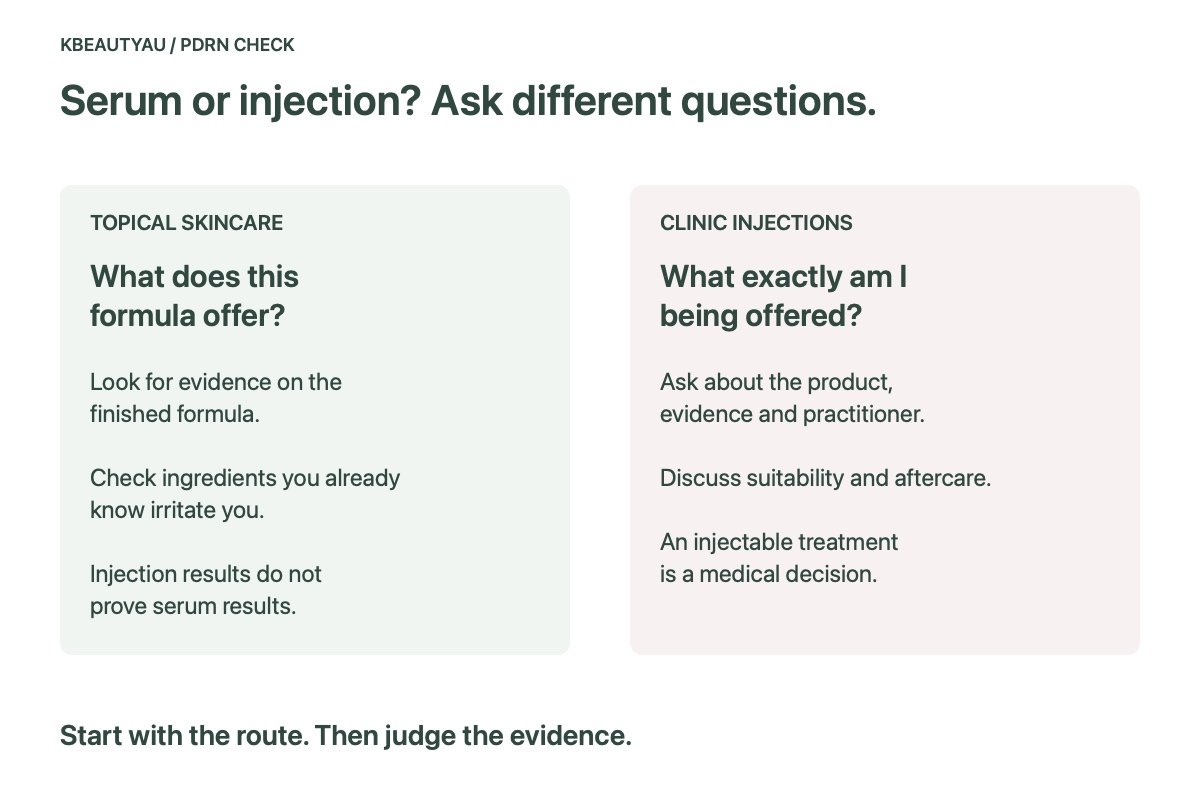
A systematic review of nine studies involving 219 patients reported promising changes in skin texture, wrinkles and elasticity after polynucleotide injections. Small studies, varied methods and limited study quality leave questions open. Those findings do not transfer to a cosmetic serum. Systematic review
 ## How does it compare with familiar ingredients?
These ingredients can address similar concerns, but they do different jobs. Choose them according to what your skin needs.
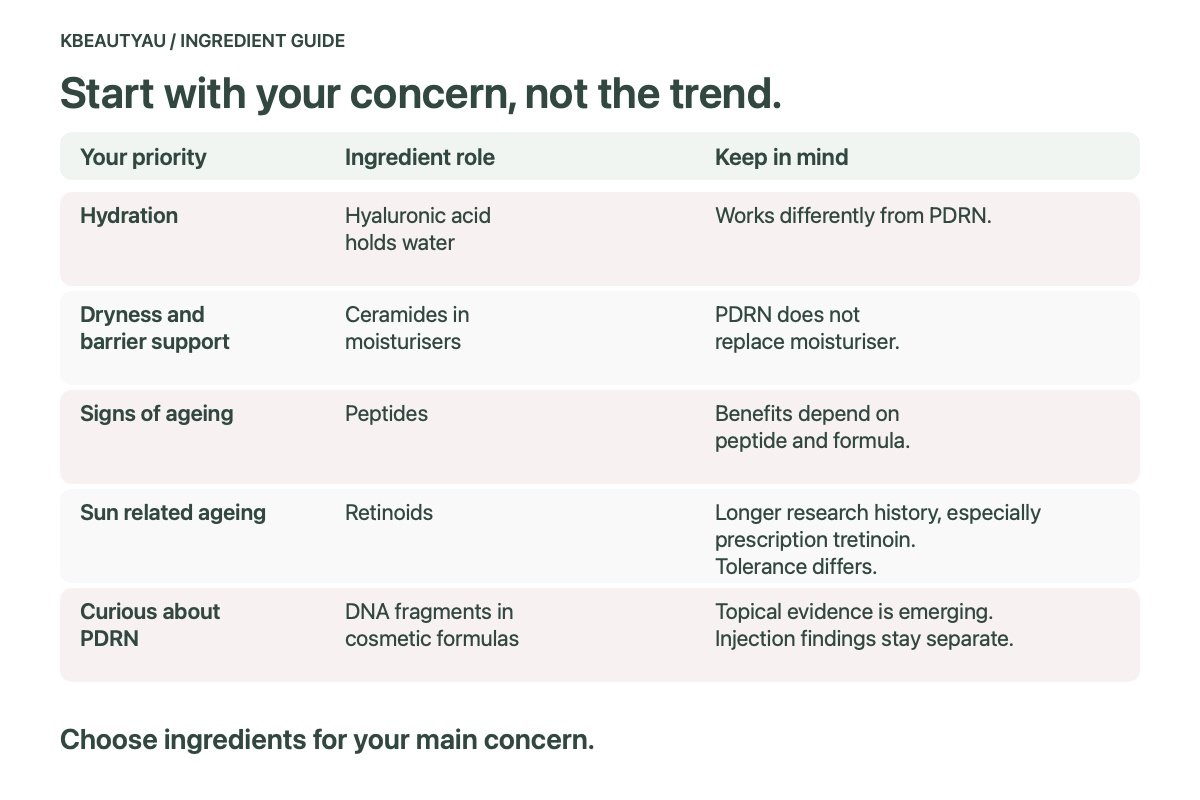 The early PDRN eye cream findings make cosmetic benefits worth investigating. They do not establish treatment benefits for eczema or rosacea. Moisturising ingredients in the formula can also contribute to softer, more hydrated skin.
If tightness is your main concern, a suitable moisturiser may answer it more directly than a new active. PDRN is an optional addition, not a replacement for the basics. Hydration trial, ceramide trial, ingredient review, tretinoin review
Who might consider it, and who should pause?
If your skin is sensitive or mature
A topical formula may be worth considering if your skin is currently comfortable and fine lines are your main concern. Check the ingredient list for anything you know irritates your skin. Introduce one product at a time and try it on a small area first so reactions are easier to trace.
If your skin is irritated or broken
If your skin is stinging, inflamed, infected or broken, pause new products and address the underlying problem. Medical wound research does not make ordinary PDRN cosmetics suitable for wounds. After laser, peels or needling, use your clinician’s specified aftercare. Never inject cosmetic serums or use DIY microneedling to push them deeper.
During pregnancy or breastfeeding
There is not enough evidence to establish PDRN safety during pregnancy or breastfeeding. Ask your maternity clinician before starting a new PDRN product or elective procedure.
If you are considering injections
Arrange an assessment with an appropriately qualified practitioner. Ask about the exact product, evidence, suitability and aftercare. In Australia, these are medical procedure decisions, not simply ingredient choices. TGA guidance
Before you add a new serum
Use this quick check to clarify your routine priorities.
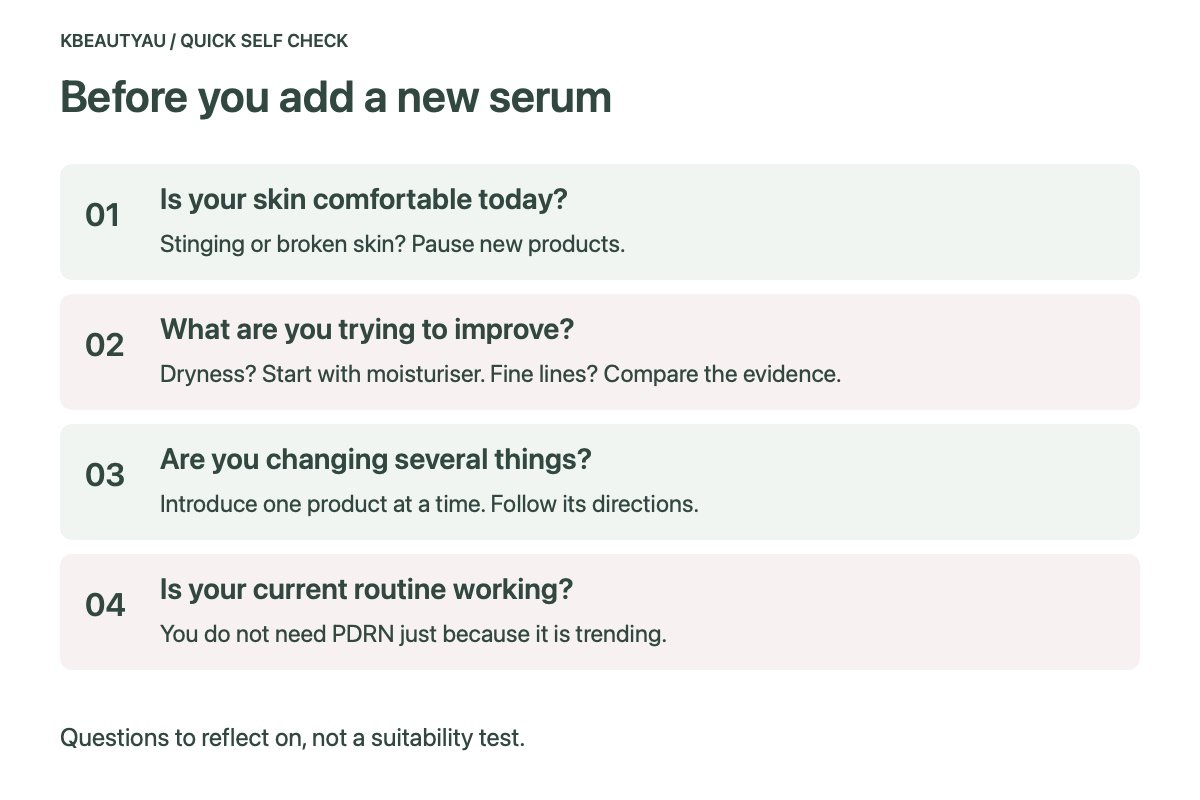 An exciting ingredient earns its place by fitting your needs. If your routine is comfortable and working, you are not missing an essential step.
Want a clearer starting point? Take the skin quiz. https://kbeautyau.com/quiz