Saggy Skin: What's Really Happening and What K-Beauty Can Do About It
Sagging skin has at least three causes and most products on the market address only one of them. Korean skincare's approach to skin laxity is more comprehensive than a single hero ingredient: it's a layered strategy built on understanding what's actually driving the loss. This is that strategy.
If you've noticed your skin looking a little less lifted than it used to, you're not imagining things and you're definitely not alone. Skin laxity is a common concern for many people as they age, though severity varies based on genetics, sun exposure, and lifestyle factors. But here's the thing most skincare brands won't tell you sagging is far more complex than simply "losing collagen." Understanding what's actually happening beneath the surface is the first step to addressing it effectively.
Why Sagging Skin Is More Complex Than You Think
Sagging skin is often simplified as a natural result of ageing or “collagen loss.” In reality, skin laxity is a multi-layered process influenced by barrier integrity, hydration dynamics, inflammation, and how the skin is treated over time.
One of the most overlooked contributors today is not ageing itself but how modern skincare routines are disrupting skin stability. Overuse of strong actives, inconsistent routines, and barrier neglect can accelerate visible loss of firmness far earlier than expected.
Understanding this shift is critical. Because once you recognise that sagging is not caused by a single pathway, the solution also becomes more strategic and far more aligned with the Korean skincare approach.
The Korean Skincare Philosophy: Firmness as a By-Product of Skin Health
Instead of trying to aggressively fix sagging skin, Korean skincare focuses on improving overall skin health so the skin naturally looks firmer.
This philosophy is built on three core principles:
- Supporting the skin barrier first
- Maintaining hydration across multiple layers
- Using low-irritation actives consistently rather than intensively
This is why professional korean skincare used in clinic protocols focuses less on short-term correction and more on long-term skin resilience.
In this framework, firmer-looking skin is not forced it is gradually supported.
What Actually Leads to Sagging Skin
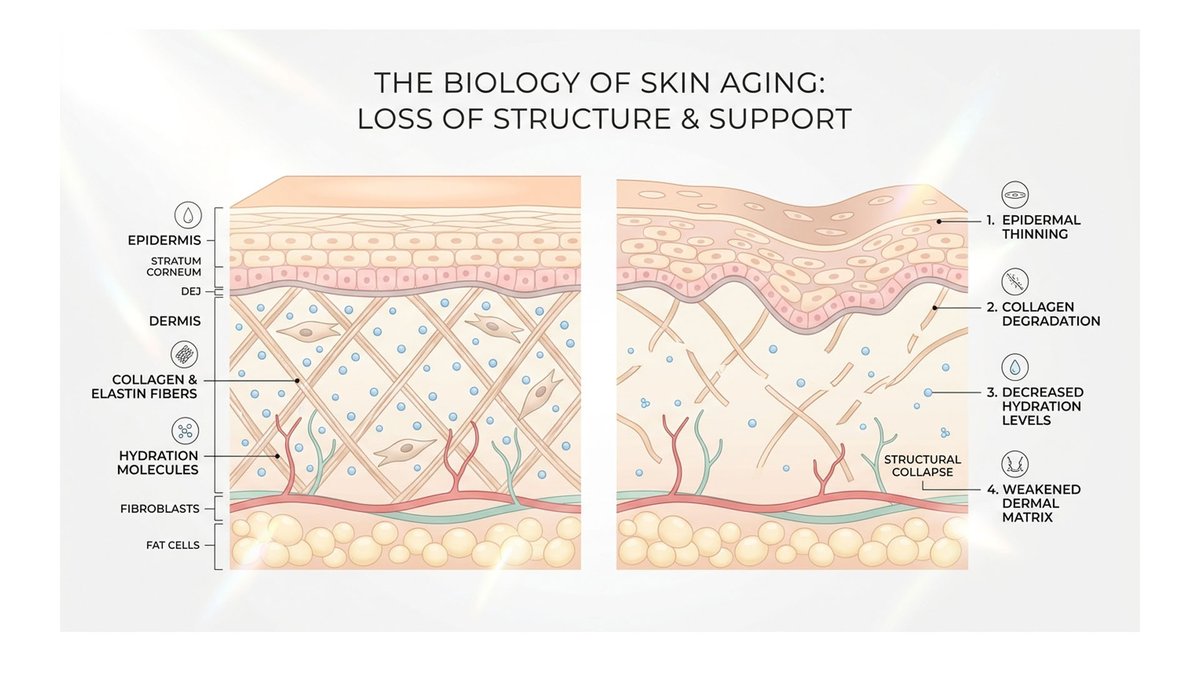
From a formulation and clinical perspective, sagging is influenced by several key factors:
Barrier Degradation
When the skin barrier is compromised, moisture loss increases and the skin becomes less resilient. Over time, this leads to a thinner, less supported appearance.
Ingredients such as ceramides and panthenol (Vitamin B5) are commonly used in Korean formulations to support the skin barrier function and improve the appearance of skin strength.
Chronic Dehydration
Hydration is directly linked to how “full” and resilient the skin appears. When hydration levels drop, the skin loses volume and elasticity, making laxity more noticeable.
Multi-weight hyaluronic acid is widely used to maintain hydration across different layers of the skin, helping to support a plumper, more resilient appearance.
Reduced Skin Renewal Efficiency
As skin becomes stressed or over-treated, its ability to renew efficiently slows down. This contributes to uneven texture and a gradual loss of firmness.
Gentle exfoliants such as PHA and LHA are preferred in Korean formulations to refine the skin’s surface without disrupting its barrier.
Persistent Sensitivity and Micro-Inflammation
Ongoing redness and sensitivity can weaken the skin over time, making it less capable of maintaining firmness.
Centella Asiatica and Madecassoside are commonly used to help calm the appearance of redness and support overall skin comfort, which contributes to healthier-looking skin.
Loss of Structural Support
RInstead of aggressively targeting structure, Korean skincare supports the skin’s natural ability to maintain firmness through ingredients such as peptides and PDRN.
These ingredients are often formulated into lightweight ampoules used in professional Korean skincare treatments, where consistent layering supports long-term skin resilience.