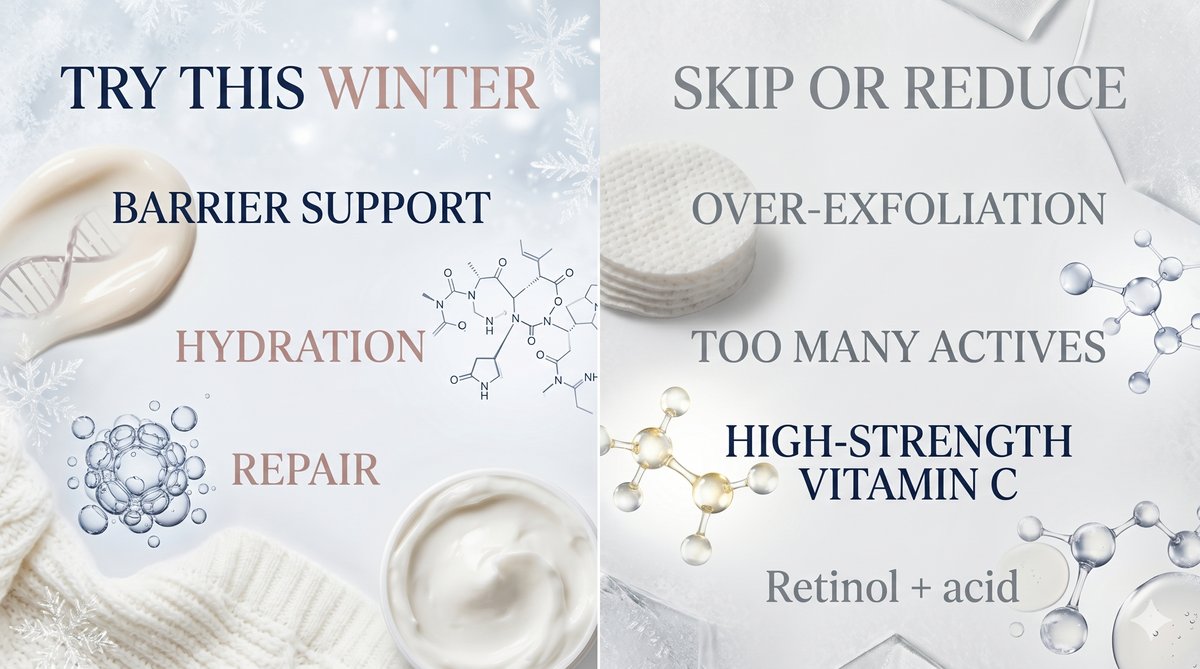
Clinical K-Beauty Trends Worth Trying This Winter and What to Skip
Winter is one of the best seasons to invest in clinical Korean skincare. The goal is to reduce barrier stress and avoid combining too many drying, irritating, or exfoliating products when the skin is already exposed to cold air, low humidity, wind, and indoor heating. Here is why, and where to focus.
Australian winters are mild by global standards, but they are reliable enough to do real damage to the skin barrier. Cold air holds less moisture. Indoor heating compounds the effect. And skin that is already compromised going into winter will spend the season fighting a losing battle against transepidermal water loss if the protocol does not account for it.
Korean clinical skincare is unusually well-suited to this period. The approach, developed in a climate with genuinely harsh winters, is built around barrier integrity as the non-negotiable foundation of everything else. The ingredients used are predominantly low-irritation, layered, and cumulative which means winter is also the right season to start them, not wait until things improve.
What follows is a considered look at the clinical K-beauty trends worth prioritising this winter, and the ones that are better left to another season or avoided entirely.
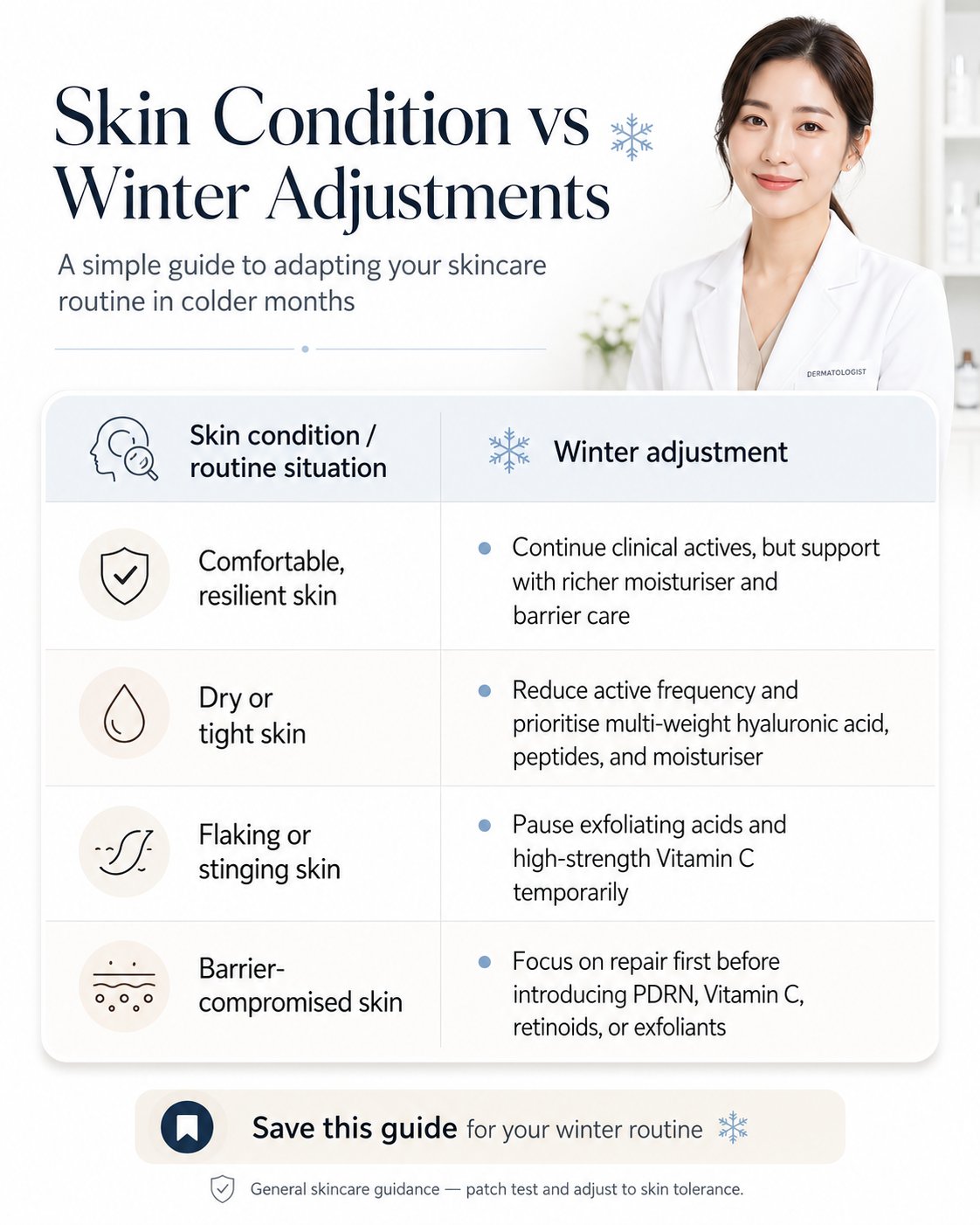
Worth Trying This Winter: PDRN
PDRN [Polydeoxyribonucleotide, derived from purified salmon DNA] has been a fixture in Korean dermatology clinics for well over a decade. In Australia, it is still arriving. That gap between clinical adoption in Korea and mainstream awareness here is worth paying attention to, because it is usually a signal of genuine staying power rather than trend momentum.
https://kbeautyau.com/blog/pdrn-skincare-korean-clinic-ingredient-skin-renewal
What PDRN does, is support the skin's natural renewal processes by working with the skin's own recovery environment. It does not force a surface response the way many mainstream actives do. This distinction matters most in winter, when the skin barrier is already under environmental stress. An active that supports rather than demands is a more considered choice for a compromised barrier than one that generates visible turnover at the cost of short-term sensitivity.
In clinic settings, PDRN is most commonly used in injectable and topical protocols across multiple sessions, typically spaced two to four weeks apart. One session is rarely informative. The cumulative effect across a properly spaced protocol is where the clinical reputation comes from. For consumers integrating PDRN through a topical product, the same principle applies: consistency over time, not a single intervention.
Winter's reduced UV load also makes it a practical season for beginning a PDRN protocol, particularly in post-procedure contexts where sun avoidance during recovery is a relevant consideration.